Showing posts with label Research. Show all posts

Friday, 10 November 2017

Perspectives | Key Words #8

  • Hyperrealism - in art hyperrealism is a style of painting that depicts objects or environments with ridiculously accurate details. As for the hyperreality in postmodernism, it describes the inability to consciously distinguish reality from a simulation of reality.  Especially in the modern society with an exceptional technological progress those two realities are seamlessly blended together that one cannot determine where the simulation ends and where the reality starts.
  • Simulation - a virtual imitation of a certain event or act for example a flight simulation which simulates the pilot flying in the sky even though he is down on the earth. Simulations can also be used to imitate/test certain outcomes of certain events which are complex to execute in reality due to unmet conditions.
  • Simulacra - a simulacrum is an object, an image or even an imaginary thing that represents a person or a certain object. This term has its origin in Greek which combines the two words “simulo” which means mirror image or illusion and “simul” which translates to similar or equal. As an example a photorealistic painting of a certain landscape can be considered as a simulacrum or even a statue of a god.
  • "Fake news" - "fake news" is a form of propaganda commonly seen on the internet, especially on social networks and social media where the information can easily go viral. The main purpose of fake news is to spread wrong information about a certain topic, person or a certain agency, mostly fake news is practiced in politics to win elections etc., which leads to wrong accusations of certain groups, people, agencies etc. Fake news creates an alternate reality which is mostly attention-grabbing and therefore making it appealing to a large group of people. They cannot distinguish the fake news from the real news unless they practice detailed and accurate research; this is comparable to hyperrealism in postmodernism since the individuals cannot consciously distinguish the reality from a simulation of a reality.

Wednesday, 8 November 2017

Perspectives | Key Words #7

  • Metafiction - form of fiction wherein the work constantly highlights the fact that it is imaginary. The application of irony and self-reflection is usually used to pose the critical question of the relation between fiction and reality. 
  • Intertextuality - mostly related to literature “Intertextuality” is a technique that is used to reshape the meaning of a text by another (mostly popular) one. Intertextuality can be seen as a form of pastiche or plagiarism since an already existing and well known text is used as a “reference” to the new text.
  • Mise-en-abyme - is a French term derived from heraldry which means “placed into abyss”. Commonly a picture which contains itself in it is imagined for example a pair of mirrors reflecting each other’s images into infinity/abyss (the image becomes infinitesimal small symbolizing the great distance as if the image is far away for example in the abyss). 
  • The 4th Wall - next to the three room dimensions in a movie there is this so called “Fourth Wall” which refers to the wall between the act/play and the audience. Usually fictional characters within a play do not refer to the audience, but when they do for example asking it questions (“Funny Games”) people call it “Breaking the 4th Wall”.

Thursday, 26 October 2017

Perspectives | Key Words #6

  • Normativity - creating or relating to a certain standard or norm. Doing something based on a norm. For example a normative production is when the process follows the standards set by a company.
  • Binary Opposition - also known as the binary system which consists of two concepts that are opposite in meaning for example modern computers are using this system having “1s” (true) and “0s” (false) as a communication/command tool.
  • Deconstruction - the act of breaking something down into its individual parts in hope of understanding its structure, meaning or mechanism. Mostly it is understood as a philosophical method of critically studying and questioning of the meaning of words in literature. In short: analyzing the relationship between text and meaning.
  • Différance - a term used by French philosopher Jacques Derrida in his theory of deconstruction. It has the general idea/meaning that since every person has different moods, background and way of perceiving things therefore a word will not have the same meaning for every person. In his concept he claims that each single word cannot give complete description. In fact words need other words to give it context/meaning.
  • Reinscribe - it may mean to rename or redefine something in a new context or simply re-write or carve words into something.
  • Cognitive dissonance - mental discomfort caused by simultaneously having two or more contradictory beliefs, ideas or values for example when a person with Christianity discusses the origin of the earth with a scientist. Both people may feel mental discomfort since their beliefs are critically questioned.


  • Judith Butler -  is an American philosopher and gender theorist whose work has influenced political philosophy, ethics and the fields of third-wave feminist, queer and literary theory. As a philosopher she mainly focuses on discussing the topic of the sex and how it affects the gender and the desire of a person. She claims that gender is merely a performance which you do at certain times that defines your gender rather than a universal "who you are". 
  •  During her studies at the Yale University she was very engaged with continental philosophy and therefore read various books and works of Karl Marx, Georg Wilhelm Friedrich Hegel, Martin Heidegger and Maurice Merleau-Ponty which influenced her a lot until today. She published her first essays about feministic theories in the late 90s and her book "Gender Trouble. Feminism and the Subversion of Identity" published in 1990 got international attention and inspired many.

    Thursday, 19 October 2017

    Perspectives | Key Words #5

    • The Canon - a general law or principle, by which something is judged, created mostly by a council or any other competent authority, for example: a Church law. 
    • DWEM - “Dead white European male” refers to the political correctness issue which caused a big discussion in the 1970s. Mostly represents male historical figures in art and culture whose talent and importance may have been exaggerated.
    • Phallocentricism - expresses male superiority, based on the phallus.
    • Eurocentrism - a worldview centered on and biased toward the western civilization. 
    • Postcolonialism - the historical period of time that represents the end of Western colonialism. The influence of the colonialism is still present.
    • Multiculturalism - a society consisting of two or more different cultural or ethnic groups.
    • Feminism - a movement that advocates the idea of gender equality. The group mostly consists of female supporters fighting for their rights.

    Thursday, 12 October 2017

    Perspectives | Key Words #4

    • Avant-garde - original, experimental ,radical, innovatory, introducing or exploring new forms or subject matter.
    • Nostalgia - the desire of returning back to a former time in one’s life or a sentimental longing for a period in the past.
    • Appropriation - to appropriate something for example censorship in media.
    • Pastiche - is a work of visual art, literature, theatre, or music that imitates the style or character of the work of one or more other artists. (reusing an existing concept or idea)
    • Parody - humorous imitation of an existing serious piece of artwork.
    • Irony - expressing one’s meaning by saying the opposite for (mostly) comedy effect.
    • Idealogy - a set of opinions or beliefs of a group that they are living after.
    • Genre - a category in which the artwork is produced according to a particular model or style.


    •  Sherrie Levine -  is an American photographer, painter, and conceptual artist. She is best known for her reproductions of notable male artists' works through photography. Most of all, Levine's reproductions focus upon idolized male artists, such as: Walker Evans, Constantin Brancusi, Vincent van Gogh, and Edgar Degas, ect. In order to critique limiting ideas of talented male artists in which Art History has traditionally undervalued the role of female artists. The artist has said: “Every word, every image, is leased and mortgaged. We know what a picture is but a space in which a variety of images, none of them original, blend and clash.” While Levine sees her work as more of a collaboration with previous artists, in copying and replicating the work of male artists Levine also levels a feminist critique in art history and society. Movements which influenced artist: conceptual art, pop art, surrealism, moden photography, feminist art.

    Wednesday, 4 October 2017

    Perspectives | Key Words #3

    • Metanarrative - Also known as the grand narrative is a narrative that claims to have the answer to everything. As for example Christianity claims to be able to explain how the world works in its entirety: The world and everything with it is created by a God.
    • Essentialism - Referring to the “essence”. It is said that every entity has this certain essence which makes it what it is. As of each culture will teach their students different skills and ideals since those are mandatory for identifying themselves as part of their specific culture. 
    • Utopian - A goal or state where everything seems perfect/ideal (depending on the culture).
    • Axiomatic - Something that is self-explanatory or unquestionably true (for example Newton’s axioms)
    • Dystopian - The counterpart to utopian, a state where everything seems terrible or simply unpleasant.
    • Scepticism - An attitude of doubt towards the truth of a particular topic or doubt in general.
    • Relativism - It supports the idea that nothing is absolute. If an action is right or wrong, it can only be judged in relation to the existing circumstances since an action which may be the correct move for one problem cannot be for another. 
    • Pluralism - When for example in a country two or more cultures coexist. It is basically a system where two or more groups (of people with different religion for example), states, authorities, etc. coexist.

    Thursday, 28 September 2017

    Perspectives | Key Words #2

    • Enlightened - learning the truth behind a once believed falsehood, showing understanding about things.
    • Ahistorical - not concerned with/or related to history, historical development, or tradition.
    • Irreducible - not able to reduce or to make smaller or simpler.
    • Objective - having one's opinion not influenced by emotions, but by hard facts.
    • Transparent - understandable, reliable.
    • Universal - holds true for everyone despite their race, sex and religion.
    • Definitive - final version of something that cannot be changed or improved.
    • Fixed - arranged or decided already and not able to be changed.
    • Structuralism - is about breaking something down to its components, examine what it is made of, how those things fit together and thereby understand how all the other things are assambled. In other words, get at the deep structure of that object:what is that essential thing that makes the object what it is and not something else. (One size fits all)
    • Modernism - seeks to find new forms of expression and rejects traditional or accepted ideas.
    • The Enlightenment Project -  is an attempt to explain and define the human being through science and trying to master it through usage of technology.
    • Poststructuralism - different to Sturcuralism, Poststructuralism believes in plurality of meaning, for example the meaning of a sentence is not absolute there are indefinite interpretations to it. In other words, Poststructuralism can be seen as a critique to Structuralism, emphasizing plurality of meaning and instability of concepts Structuralism uses to define society, language etc.
    • "The Unreliable Narrator" - a character who is telling the story not in complete accuracy due to problems with the character's mental state or maturity.

    Saturday, 23 September 2017

    Perspectives | Key Words

    • High Modernism - is a form of modernity, characterized by an unfaltering confidence in science and technology as means to reorder the social and natural world.
    • Capitalism - is an economic system and an ideology based on private ownership of the means of production and their operation for profit.
    • Superabundance - an excessive amount of something that is beyond the required amount, possibly with negative effect. 
    • Disconnected -  to undo or break the connection of or between something.
    • Schizoid - characterized by a lack of interest in social relationships, a tendency towards a solitary or sheltered lifestyle, secretiveness, emotional coldness, detachment, and apathy.
    • Pop - popular culture of the time; including art, music, fashion.
    • Fragmentary - consisting of/or reduced to fragments; broken; disconnected; incomplete.
    • Eclectic nostalgia -  false sense of nostalgia and pleasant feeling resulting from a number elements that imitate the past.
    • Superficiality - displaying a lack of thoroughness or care, lack of depth in character or thought.
    • Simulacra - is a representation or imitation of a person or thing.
    • Flippant - lacking proper respect or seriousness.
    • Fabulation - to tell invented stories; create fables or stories filled with fantasy. (to relate an event as a fable.)
    • Pastiche - is a work of visual art, literature, theatre, or music that imitates the style or character of the work of one or more other artists.
    • Bricolage - is the construction or creation of a work from a diverse range of things that happen to be available, or a work created by mixed media.
    • Aleatory - of or relating to accidental causes; of luck or chance; unpredictable.
    • Depthless - beyond one's knowledge or capability.
    • Skeptical - doubtful about a particular thing.
    • Ambiguous -  lacking clearness or definiteness.
    • Innovative - tending to create, or introduce something new or different.
    • Obfuscation - to confuse, make something unclear.

    Saturday, 15 October 2016

    Bill Plympton and Richard Williams - Review


    Bill Plympton
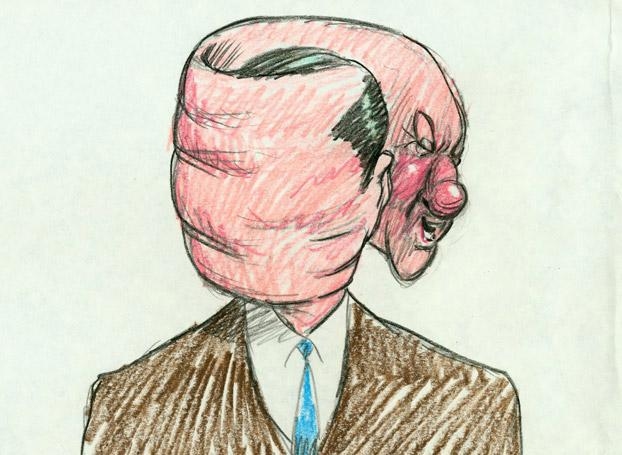
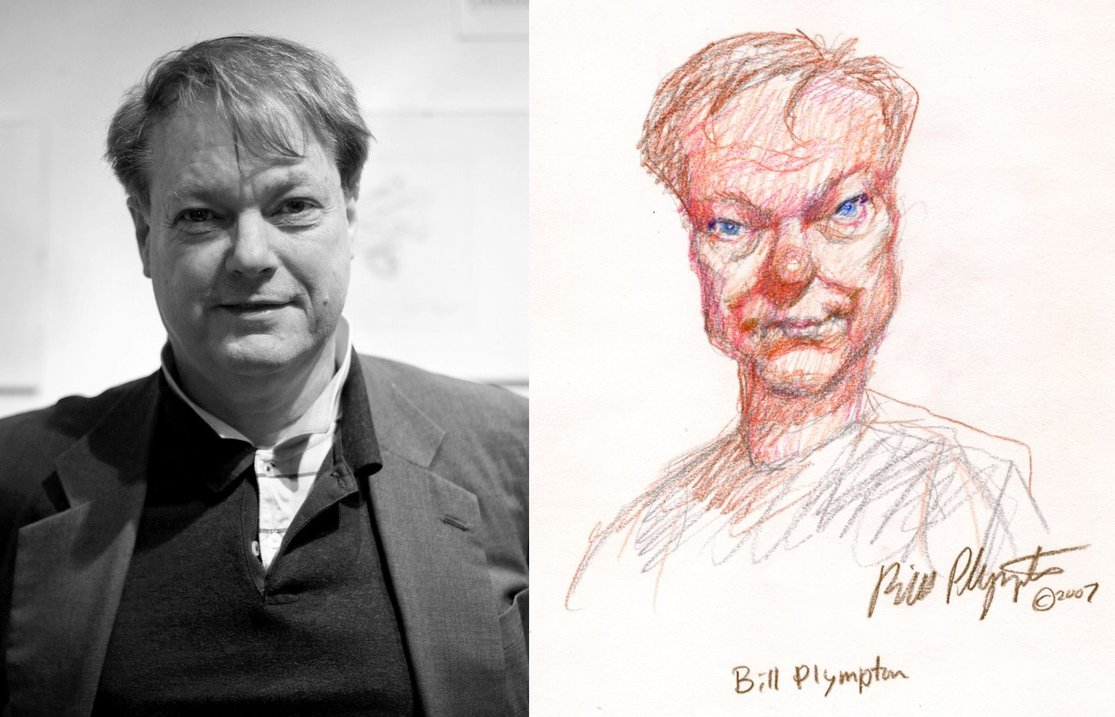
    Bill Plympton is an animator, graphic designer, cartoonist, and filmmaker best known for his animated short video “Your Face”. Also, “Idiots and Angels’ and “I Married a Strange Person!”


    Fig.1
    Plympton had created over 40 animated short films and animated 6 videos. He has also published a comic book, called “The Sleazy Cartoons of Bill Plympton”. Moreover, many of the male characters in his cartoons are self-portraits. His technique of drawing is using soft sketchy looking lines, which gives that warm and welcoming look. Nevertheless, this artist prefers to draw traditionally with coloured or graphite pencils. Plympton draws many sketches before making the final idea, also, for him to animate few second video takes more than a few months.

    Fig.2


    Richard Williams

    Richard Williams is a Canadian animator, voice artist, and writer, best known for is his work on "The Thief and the Cobbler", "Who Framed Roger Rabbit"  and "The Little Island".
    Fig.3

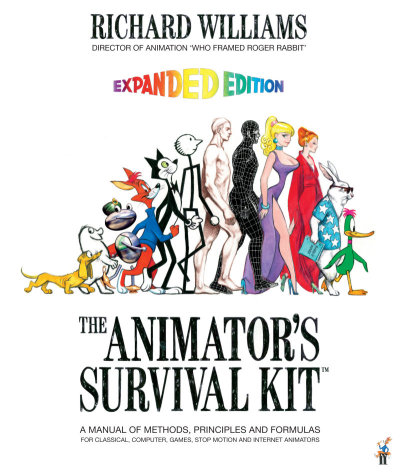
    Richard Williams has won 3 Oscars, 3 British Academy Awards and over 250 other international awards, which is really amazing for such great artist to be awarded. Moreover, Williams has released a DVD called, "The Animator's Survival Kit". In it you can find many useful tricks on how do things move, and specific work methods used to make characters live, breathe, think and give a sustained commanding performance.Williams demonstrates his points with drawing, performance and over 400 specially animated examples. Richard Williams animating technique is far more amazing, he draws solid lines, does perfect shading if needed and the best part of his work is exaggerating his animated characters' movements, giving more life to it. Some of these works are realistic and some of it is cartoonish, he has knowledge of all possible animating positions and perspectives.
    Fig.4


    Bibliography:
    Bill Plympton

    http://www.plymptoons.com/about/

    Richard Williams

    https://www.theguardian.com/film/2013/apr/19/richard-williams-master-animation


    Illustration List:
    Fig.1

    http://images.huffingtonpost.com/2015-04-13-1428955320-8443622-movies.box.billplympton.widea.jpg
    Fig.2 
    http://www.chud.com/wp-content/uploads/2015/04/bill_plympton_by_morteneng21-d49uzak.jpg
    Fig.3 http://www.skwigly.co.uk/wp-content/uploads/2013/09/WEB_Richard-Williams_portrait.jpeg
    Fig.4  http://www.theanimatorssurvivalkit.com/images/ExpandedEdition_400x474.jpg